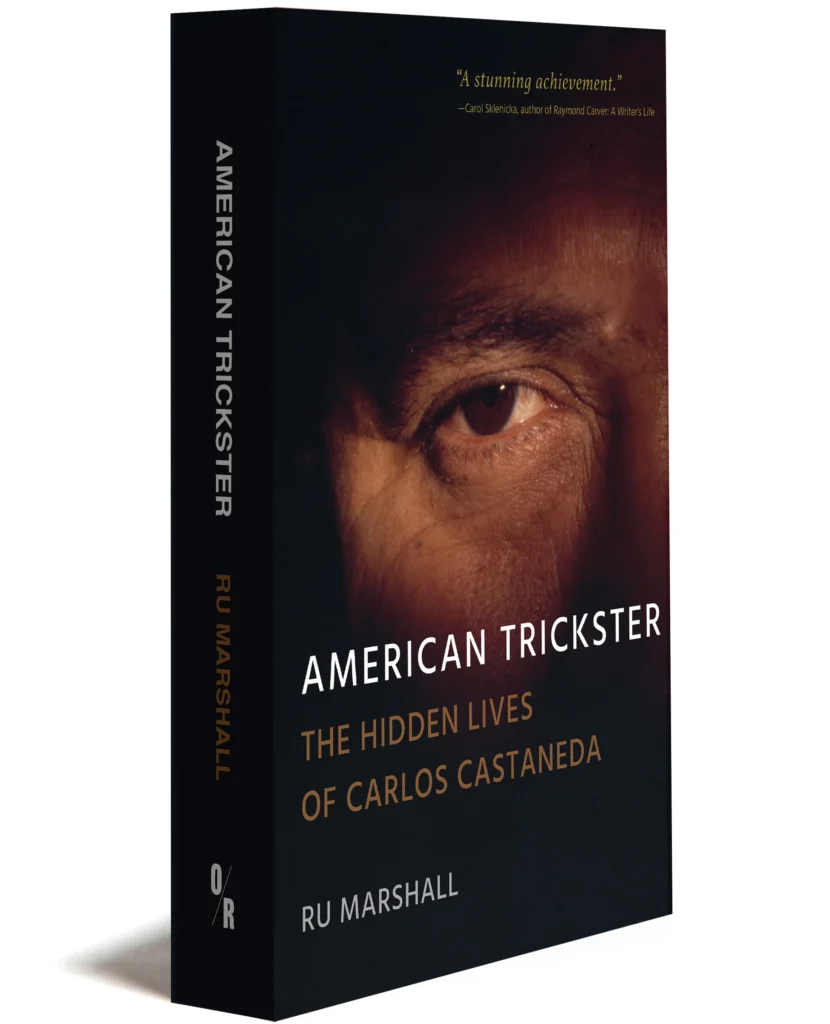
American Trickster: The Hidden Lives of Carlos Castaneda
In 1982, a young graduate student in anthropology at the University of California, Los Angeles (UCLA) published a purported memoir describing an immersive stay among Indigenous people and their shaman, with the narrator undergoing initiation rites and experiencing altered states through plant-based hallucinogens under the guidance of an elder healer. Told in vivid, novelistic prose, the book presented itself as authentic fieldwork — a firsthand account of a hidden world governed by dreams, spirits, and sorcery. It was warmly reviewed, sold briskly, and for a time found its way onto university reading lists as an example of experiential ethnography.
Scrutiny followed. Researchers and journalists found the narrative bore an uncanny resemblance to earlier published accounts by ethnographers and other authors, and the field research proved difficult to substantiate.
VIEW HERE

The Immortality Key: The Secret History of the Religion with No Name
Reading Brian Muraresku’s wonderful new book, The Immortality Key, I was reminded, oddly enough, of the “Back to the Future” movie trilogy of the 1980s and early ’90s, and I mean that in the most positive sense.
VIEW HERE

Ethnobiology for the Future: Linking Cultural and Ecological Diversity by Gary Paul Nabhan
“This book will be devoured by all Nabhanophiles and should be read by all those interested in food, culture, conservation, botany, and the worlds around them. So chock full of great ideas, penetrating insights, and unforgettable landscapes, it should be savored slowly like the fine feast it is!”—Economic Botany.
VIEW HERE
